
Bee venom has gained attention for its role in skincare, medicine, and research. The demand for it has raised questions about the safety of the bees involved. Many people want to know if extracting bee venom harms or kills the insect. The answer depends on how the venom is collected and how much stress it places on the colony.
What Is Bee Venom
Bee venom is a clear liquid that bees release when they sting. It contains peptides, enzymes, and proteins in the venom that trigger pain and inflammation in humans and animals. The composition of bee venom includes compounds like melittin and apamin, which are studied for their biological activity. Venom proteins are the reason researchers and companies place such high value on this substance.
The venom gland of a honey bee produces the liquid. A sting occurs when a bee injects venom into the skin of a person or predator. In a natural sting, the bee usually loses its stinger, leading to death. However, venom extraction in controlled settings avoids this fatal outcome.
How Bee Venom Is Collected
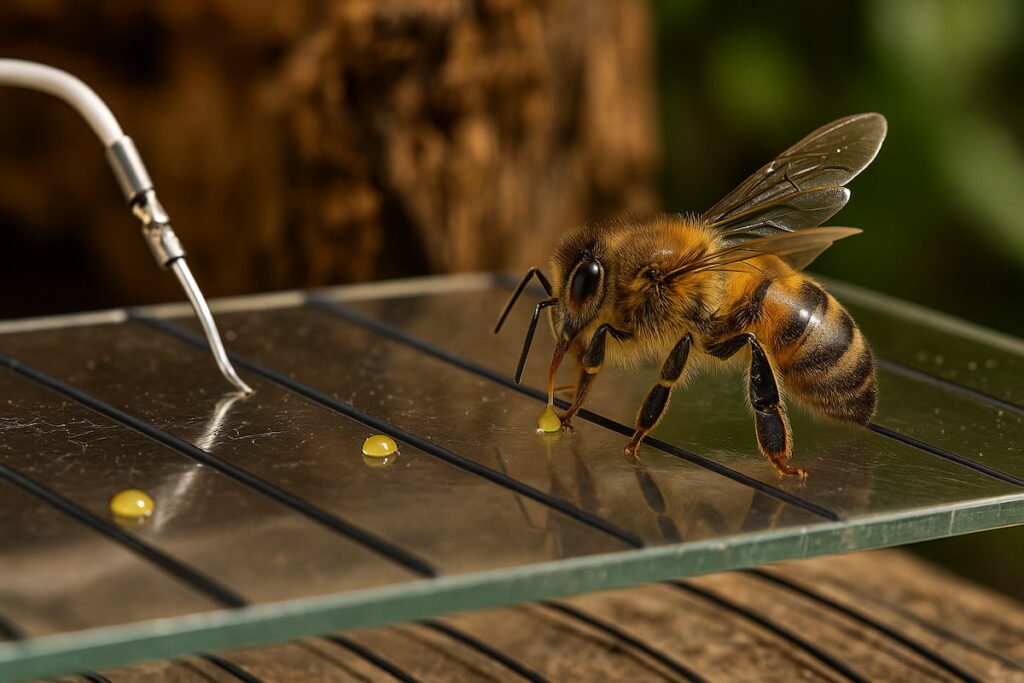
Beekeepers use a special process to collect bee venom without killing the insect. A device for venom gathering is placed at the entrance of the hive. This device uses mild electrical pulses that stimulate worker honey bees to extend their stingers. Instead of piercing skin, the stingers release venom onto a glass plate. The bees retract their stingers and fly away.
The venom then dries on the surface, becoming dry venom or dried bee venom. Beekeepers scrape the substance off and store it as crude bee venom. This collection of bee venom allows people to harvest the material without removing food supplies or harming queen and worker honey bees directly.
Does Venom Extraction Kill Bees
Extracting bee venom does not usually kill bees because the stinger does not get trapped in human skin. The process of venom extraction lets a bee sting a surface without losing its stinger. This method reduces the chances of death, unlike when a bee stings a person or an animal.
Still, venom gathering may stress the bees. Worker bees can become agitated, and hive activity may slow down for a short period. Repeated collection of bee venom could also affect bee welfare if done too often. While venom without killing the bees is possible, ethical debate continues. Some people believe the stress on a bee colony is too high, while others argue that careful extraction is safe.
Applications of Bee Venom
Therapeutic Use of Bee Venom
Bee venom therapy has a long history in traditional medicine. People have used venom extracts to treat arthritis, muscle pain, and inflammatory diseases. The application of bee venom in acupuncture, known as bee venom acupuncture or bee venom pharmacopuncture, involves injecting small amounts into the skin. Venom research continues to study the effectiveness of bee venom for autoimmune conditions and neurological disorders.
Bee Venom in Skincare
Bee venom skincare products claim to smooth wrinkles, boost collagen, and improve skin elasticity. The use of honey and added bee venom in creams and serums makes them popular in beauty markets. The benefits of bee venom in skincare remain under review, but many people report positive results.
Medical Research
The effectiveness of bee venom has been studied for multiple health issues. Some scientists explore bee venom in cancer therapy, looking at how components in bee venom interact with tumors. Venom has been shown to trigger immune responses that may benefit patients in the future. Venom research also focuses on venom allergens, safety of bee venom in treatments, and risk associated with bee venom use.
Properties and Components of Bee Venom
The composition of bee venom is complex. Whole bee venom contains melittin, phospholipase A2, and bee venom hyaluronidase. These components of the venom act together to produce pain, swelling, and other reactions. High doses of bee venom can be dangerous, especially for someone allergic to bee venom.
The therapeutic effects of bee venom are tied to the proteins in the venom and the way they interact with human cells. Each component of bee venom plays a role. For example, melittin has strong anti-inflammatory effects, while apamin affects nerve signals. Bee venom contains compounds that scientists want to harness in safe doses.
Risks Associated with Bee Venom
Using bee venom carries risks. People allergic to bee venom may suffer severe reactions after exposure. Anaphylaxis is a life-threatening condition that can occur when someone sensitive to hymenoptera venom is stung or treated with bee venom injection. The administration of bee venom in therapy requires professional supervision because venom may cause swelling, dizziness, or even death in extreme cases.
Another risk is honey bee colony losses if extraction is not managed well. Overharvesting may weaken bees, reducing their ability to produce honey and maintain hive health. Bee keepers must balance the benefits of venom with the welfare of the colony.
Comparing Venom Collection to Honey Harvesting
Venom obtained from honey bees differs from collecting honey. Honey collection removes stored food, while venom gathering only removes the secretion from worker bees. Still, both practices require caution. Venom is produced naturally as a defense mechanism, so constant stimulation can stress colonies. Responsible bee keepers rotate hives, limit extraction sessions, and monitor the queen bee along with the venom production.
Ethical Concerns in Bee Venom Collection
Bee welfare is central to the debate over venom removal. While bee venom is produced without killing the insects, questions remain about long-term stress. Overusing a bee venom collector could reduce productivity and increase honey bee colony losses. Advocates for responsible extraction argue that moderation protects bees and allows venom studies to continue.
Critics say the use of bee venom treatment and bee venom skincare may not justify the stress placed on bees. They argue that safer alternatives should replace venom in treating human diseases. Supporters counter that therapeutic effects of bee venom provide hope for people who do not respond to other treatments.
Measuring Venom Output
The amount of venom a bee produces depends on its age, health, and the season. Worker bee venom output tends to peak in mid-summer when colonies are strongest. The amount of bee venom collected in one session may appear small, but when scaled across multiple hives, it can provide large amounts for research and cosmetics.
Venom extraction yields vary, and researchers continue to study how to collect the venom more efficiently without stressing bees. A bee venom collector may gather a few milligrams of venom from honey bees in one session. The dry weight of venom collected is then processed into bee venom samples for medical or cosmetic use.
Research on Venom Use
Venom research continues to explore how bee venom is used in modern treatments. Studies look at venom in treating neurological diseases, arthritis, and even infections. Scientists examine how venom extracts interact with human cells and how components in bee venom can be isolated for medicine.
Researchers also test the safety of bee venom and the effectiveness of bee venom in different doses. Some trials show promise for venom in cancer therapy, while others highlight the risks associated with high doses of bee venom. The therapeutic effects of bee venom require careful study to avoid harm.
Conclusion
Extracting bee venom does not usually kill bees because the stinger remains intact. Venom collection uses devices that allow a sting-like action without trapping the stinger, which means the bee flies away unharmed. Still, constant stimulation can stress colonies. Ethical questions about bee welfare remain, especially when venom collection is done too often.
Bee venom has shown promise in medicine, skincare, and research. Venom proteins play a role in reducing inflammation and boosting immune response, while applications such as bee venom acupuncture and bee venom pharmacopuncture expand interest in therapy. However, people allergic to bee venom face life-threatening risks, and honey bee colony losses may rise if beekeepers misuse venom removal methods.
The future of bee venom lies in responsible practices. Venom without killing the bees is possible, but the collection of bee venom must respect the balance between human benefit and bee welfare. Researchers continue to study venom components, and the effectiveness of bee venom in health care will depend on safe methods. Protecting queen and worker honey bees while advancing venom studies is the key to making sure bee venom is produced sustainably.