
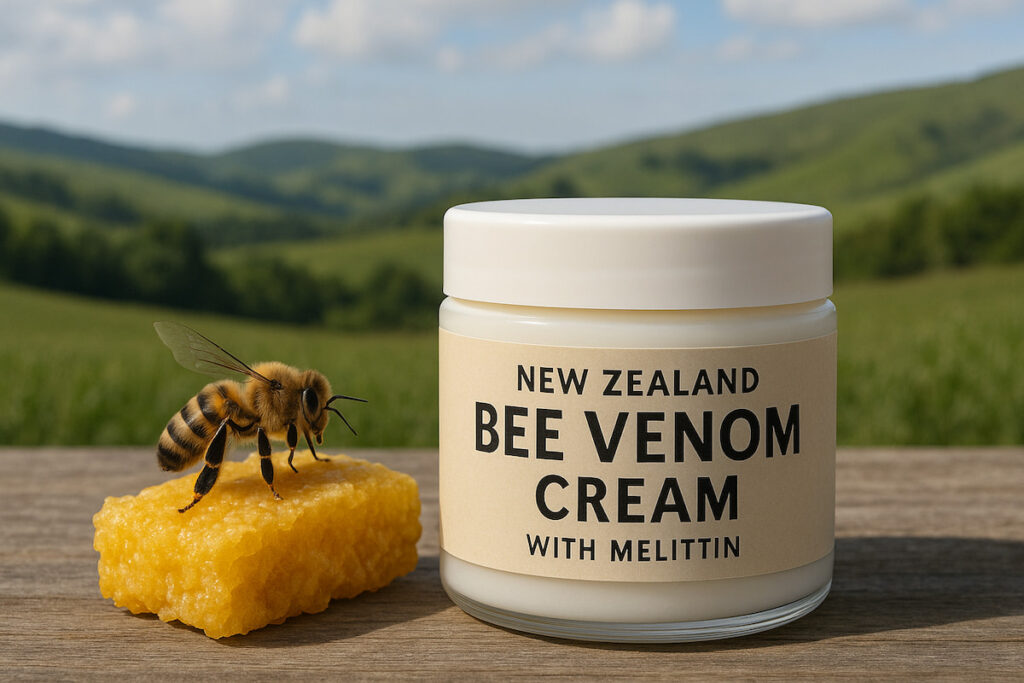
New Zealand has built a strong reputation for natural products, especially manuka honey, bee pollen, and propolis. Alongside these exports, researchers and consumers are increasingly interested in melittin, the peptide in bee venom that has been studied for its bioactive effects. While bee venom has been used for centuries in traditional medicine, modern science is now looking at its potential for joint health, pain relief, skin rejuvenation, and antimicrobial properties.
What Is Melittin?
Melittin is the primary peptide found in bee venom. This bioactive molecule represents about half of the venom and plays a central role in its biological activity. Scientists recognize it as a potent anti-inflammatory compound that interacts with cell membranes and influences the body’s immune response. Because venom contains various bioactive compounds, including phospholipase a2, apamin, and hyaluronidase, researchers often study this as part of a wider set of natural substances secreted by honeybees.
The New Zealand Advantage
New Zealand offers clean environments, strong biosecurity, and strict standards in agriculture. These qualities help position New Zealand bee venom as a high-quality source of melittin. Producers often highlight that the collection process does not harm the bees. A mild current encourages the stinger to release venom onto a glass plate, which then dries and is collected for processing. This method allows beekeepers to gather natural bee venom without endangering hive health.
Traditional and Modern Uses of Bee Venom
Historical Context
Bee venom has been used in traditional medicine for joint discomfort and inflammatory response for centuries. Ancient practices focused on its ability to reduce pain and enhance blood flow. The idea that bee venom may help with chronic pain laid the foundation for modern applications.
Modern Applications
Today, bee venom products are found in different forms, ranging from capsules and dietary supplements to bee venom gel and relief gel designed for topical application. Some formulas combine bee venom with glucosamine to support joint care, while others pair it with natural ingredients like collagen or manuka honey to promote skin health and rejuvenation.
Melittin and Joint Health
Joint pain and inflammation remain common concerns for people dealing with arthritis or rheumatoid conditions. New Zealand melittin has attracted attention for its potential role in supporting joint health. Bee venom cream, joint gel, and professional joint relief products often claim to harness melittin’s potent anti-inflammatory effects.
It influences permeability in cell membranes and may reduce swelling around affected joints. This mechanism supports joint care by calming inflammatory responses and enhancing blood circulation. Some clinical references suggest that bee venom has been used to relieve symptoms of arthritis, though more controlled studies are needed.
Topical Bee Venom Products
New Zealand companies produce a variety of personal care items that include melittin. Popular categories include:
Bee venom gel: Used for muscle soothing, joint pain, and skin health.
Relief gel: Designed for targeted joint pain relief.
Bee venom cream: Marketed for skin rejuvenation and reducing signs of aging, often combined with collagen or hyaluronic acid.
These products aim to deliver local effects, supporting healthy joints, muscle relaxation, and improved skin texture.
Research on Bioactive Properties
Melittin’s bioactive activity continues to interest scientists in several areas:
Anti-inflammatory properties: Studies confirm that it acts as an anti-inflammatory agent, reducing inflammatory response in tissues.
Antimicrobial properties: Laboratory tests show that it exhibits antimicrobial properties, inhibiting bacterial growth.
Anticancer properties: Research explores how it affects breast cancer cells and other cancer cells, noting its cytotoxic effects in controlled assays.
Immune-modulating effects: Some studies suggest that it influences immune-modulating pathways, which may help manage chronic conditions.
While results look promising, these findings remain largely experimental. Consumers should treat melittin as part of research-backed wellness rather than a guaranteed treatment.
Collection and Purification
New Zealand producers emphasize the quality of their bee venom collection. Venom is gathered through non-lethal techniques and processed into bee venom powder or extracts. These are then purified using chromatography and other methods to isolate melittin with higher purity. Finished products often include a technical description, specification sheet, or safety data sheet to assure buyers of quality.
Safety and Precautions
Despite its potential, melittin requires careful use. People allergic to bee stings should avoid bee venom products entirely, since bee venom contains proteins that can trigger severe reactions. Even those without allergies should use small amounts first, as topical products can cause redness, swelling, or irritation.
Medical professionals caution against using bee venom supplements without guidance, particularly for individuals with autoimmune conditions, pregnant women, or those managing multiple medications. Consulting a healthcare provider before trying bee venom joint relief or dietary supplements remains essential.
The Growing Market for Bee Venom in New Zealand
The global market for bee venom products continues to expand, with New Zealand positioned as a premium source due to its strict quality control and clean environment. Producers offer a wide range of health products, including bee venom gel, joint care creams, dietary supplements, and personal care lines enriched with manuka honey and venom extracts.
Bee venom has been used to promote joint care, enhance blood flow, and support skin health, but modern marketing now highlights active components of bee venom as the specific peptide responsible for many of these effects. This focus aligns with increasing consumer interest in natural substances and bioactive molecules backed by emerging science.
Final Thoughts
New Zealand melittin highlights the country’s blend of tradition, natural resources, and modern research. Derived through humane collection methods that do not harm the bees, peptide in bee venom offers potential for joint health, pain relief, and skin rejuvenation. Bee venom resources like joint gels, capsules, and creams continue to attract attention in both the wellness and scientific communities.
While studies highlight anti-inflammatory properties, antimicrobial activity, and even anticancer properties, it remains under investigation. People interested in bee venom resources should balance curiosity with caution, always considering safety and professional guidance. With its reputation for high-quality natural substances, New Zealand stands out as a global leader in producing melittin and other bioactive health products.