
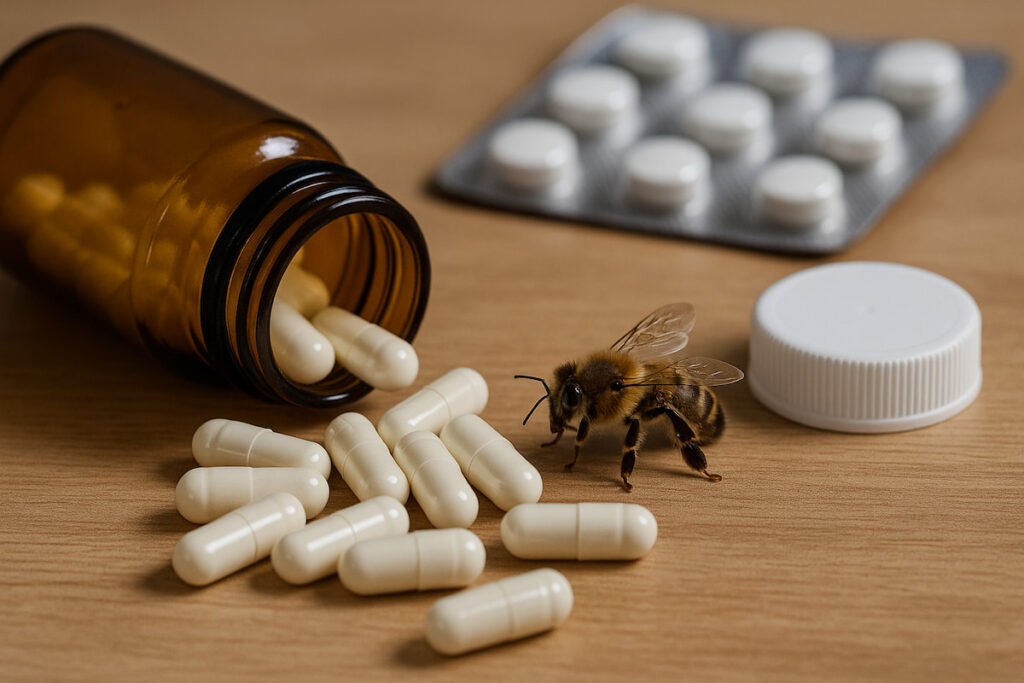
Melittin is the primary peptide component of bee venom, accounting for nearly half of its dry weight. It has been studied extensively because of its strong biological activity, including its ability to disrupt cell membranes, influence inflammation, and trigger immune responses. While research highlights the therapeutic effect of melittin in laboratory studies, it also underscores the risks tied to its use in supplements. Products containing melittin are sold in capsule, powder, and cream forms, marketed as natural support for joint relief, immune modulation, and even cancer therapy. But these supplements raise safety concerns because melittin can cause adverse effects that outweigh its potential benefits.
This article examines the side effects of melittin supplements in detail, explores evidence from studies of bee venom therapy, and explains why caution is essential for anyone considering their use.
What Is Melittin?
Melittin is a cationic peptide of 26 amino acids, secreted through the venom gland of the honeybee. The structure of melittin allows it to insert into lipid bilayers and form pores that destabilize cells. This action of melittin makes it cytolytic, meaning it can destroy cells by causing leakage of internal contents.
In bee venom, melittin is the major pain-producing substance during a bee sting. When a person is stung, melittin induces pain, swelling, and redness. Research has shown that melittin may influence inflammatory pathways, immune function, and cell growth. Because of these properties, scientists continue to investigate the activity of melittin for cancer therapy, antimicrobial treatments, and arthritis.
How Bee Venom Differs from Honey
Honey and venom are often confused because both are produced by bees, but they serve very different purposes. Honey is a food made from nectar, while venom is a defense mechanism. Honeybee venom contains melittin, apamin, phospholipase A2, and other bioactive molecules. Honey contains sugars, enzymes, antioxidants, and trace peptides, but not melittin.
When companies sell melittin supplements, they either extract melittin from whole bee venom or use synthetic melittin made in laboratories. Because melittin is the major component of bee venom, it carries the same risks as exposure to venom itself.
The Effect of Bee Venom
The effect of bee venom on the body has been studied through traditional practices and modern science. Bee venom therapy, including bee venom acupuncture, bee venom pharmacopuncture, and even live bee stings, has been used in parts of the world for arthritis, pain relief, and inflammation. However, the use of bee venom also raises safety concerns. A systematic review and meta-analysis of bee venom treatment concluded that while the therapeutic effect may exist, the risk associated with bee venom is significant.
The effects of bee venom include:
- Local swelling and redness
- Pain and burning sensations
- Allergic reactions to bee stings
- In rare cases, life-threatening anaphylaxis
Because melittin is the main peptide in honeybee venom, many of these effects apply directly to melittin supplements.
Side Effects of Melittin Supplements
Local Reactions
Melittin treatment in topical form often causes redness, itching, and irritation. This happens because melittin stimulates primary afferent fibers in bee sting pathways, which send pain signals to the nervous system.
Pain
Melittin is the main compound responsible for the painful sensation of a bee sting. Supplements may still trigger localized pain when applied in creams or injections of melittin.
Inflammation
Although melittin has been studied for its anti-inflammatory effect, higher doses of bee venom or concentrated melittin can create the opposite outcome. Instead of calming inflammation, it may worsen swelling and irritation.
Allergic Reactions
One of the most dangerous risks is allergic reactions to bee venom. People who are allergic to hymenoptera venom should avoid melittin. Allergic reactions to bee stings can include hives, throat swelling, difficulty breathing, and anaphylaxis. Immunotherapy for hymenoptera venom allergy exists in controlled clinical settings, but supplements sold online do not provide this safety net.
Digestive Effects
When taken orally, melittin supplements can irritate the digestive tract, causing nausea, diarrhea, and cramps. The effect associated with membrane disruption extends to gut tissue, making oral ingestion risky.
Systemic Risks
Melittin may alter immune function. Bee venom immunotherapy is sometimes used under medical supervision to treat venom allergy, but uncontrolled dosing of melittin supplements may trigger immune overreactions. Cardiovascular effects, such as dizziness or drops in blood pressure, have also been observed.
Risks from Bee Venom Therapy Research
Studies on bee venom treatment shed light on melittin’s risks. Bee venom is sometimes used in acupuncture and bee venom acupuncture for shoulder pain, arthritis, or other inflammatory conditions. Research shows mixed results. Some trials highlight the anti-inflammatory effect and possible pain relief, while others focus on the adverse events of bee venom such as rashes, pain, and allergic reactions.
A systematic review of bee venom acupuncture found that the efficacy and safety of bee venom acupuncture remain uncertain. While some results suggest benefits, the risk of adverse effects cannot be ignored. High doses of bee venom, live bee stings, and bee venom injections have caused serious allergic reactions and systemic side effects.
Cancer Research and Melittin
Melittin also attracts interest in cancer research. Studies on breast cancer cell lines, ovarian cancer cells, and lung cancer cells showed that melittin induces apoptosis. Researchers found that venom and melittin suppress growth by disrupting cancer cell membranes. Melittin suppress growth factor receptor activation in HER2-enriched breast cancer cells and reduces proliferation in aggressive breast cancer subtypes.
The anti-cancer effect of bee venom has been demonstrated in laboratory models, but melittin supplements for cancer treatment are not proven safe. While melittin ameliorated tumor activity in cell studies, high doses of bee venom or melittin alone could harm healthy tissue. The efficacy of melittin remains tied to targeted delivery, something that supplements cannot provide.
Examples of Findings
- Studies demonstrated that melittin induces apoptosis in cancer cell lines, but also causes cytotoxic effects in healthy cells.
- Researchers showed that melittin alone reduces tumor growth in lab animals but requires careful targeting of melittin to avoid collateral damage.
- Honeybee venom and melittin suppress cancer cells via multiple mechanisms, but these studies cannot justify over-the-counter supplement use.
- Documented Adverse Effects
A study of bee venom injections for arthritis patients reported adverse events of bee venom, including pain, swelling, and allergic responses. Another review highlighted that bee venom therapy carries safety concerns even when diluted bee venom or purified bee venom is used. The safety of bee venom pharmacopuncture depends heavily on dosing and screening for venom allergy, both of which are absent in commercial melittin supplements.
Reported adverse effects include:
- Pain at the site of application
- Fatigue and headaches
- Muscle soreness
- Rash or eczema
- Severe allergic reactions
The efficacy of bee venom treatment is still debated, but the risks are well documented.
Long-Term Risks of Melittin Supplements
Tissue Damage
Chronic use of melittin supplements could damage tissue by constantly disrupting membranes.
Immune Sensitization
Frequent exposure to melittin may increase risk of developing venom allergy, leading to stronger reactions to future bee stings.
Drug Interactions
Melittin may interact with immune-modulating drugs, cancer therapies, or anti-inflammatories. Because no systematic review exists on these interactions, the risks remain unknown.
Safer Alternatives to Melittin Supplements
For those seeking benefits linked to bee products, safer alternatives exist:
- Honey: Offers antibacterial properties without melittin.
- Propolis: Contains phenolic compounds with anti-inflammatory properties.
- Royal Jelly: Provides proteins and fatty acids for nutrition.
- Manuka Honey: Known for wound-healing and antimicrobial activity.
These products provide therapeutic effects without the risks associated with melittin.
Final Thoughts
Melittin is the major component of honey bee venom and has been studied for its effects on inflammation, immunity, and cancer cells. Laboratory evidence suggests that melittin may offer therapeutic potential, and the anti-cancer effect of bee venom is a subject of ongoing research. However, supplements marketed as melittin products carry risks that cannot be ignored.
Adverse effects include pain, allergic reactions, digestive issues, and immune overstimulation. High doses of bee venom or melittin treatment can cause tissue damage and dangerous systemic responses. Research on bee venom therapy and bee venom acupuncture shows that the efficacy of bee venom remains uncertain, while the risk associated with bee venom is clear.
The safety of bee venom supplements is not established, and systematic reviews emphasize the adverse events of bee venom therapy. Until more controlled studies confirm the safety and efficacy of melittin, supplements should not be used casually.
Honeybee venom and melittin highlight how powerful natural compounds can be. They may one day contribute to medicine, but in the current state, melittin supplements pose more harm than benefit.