
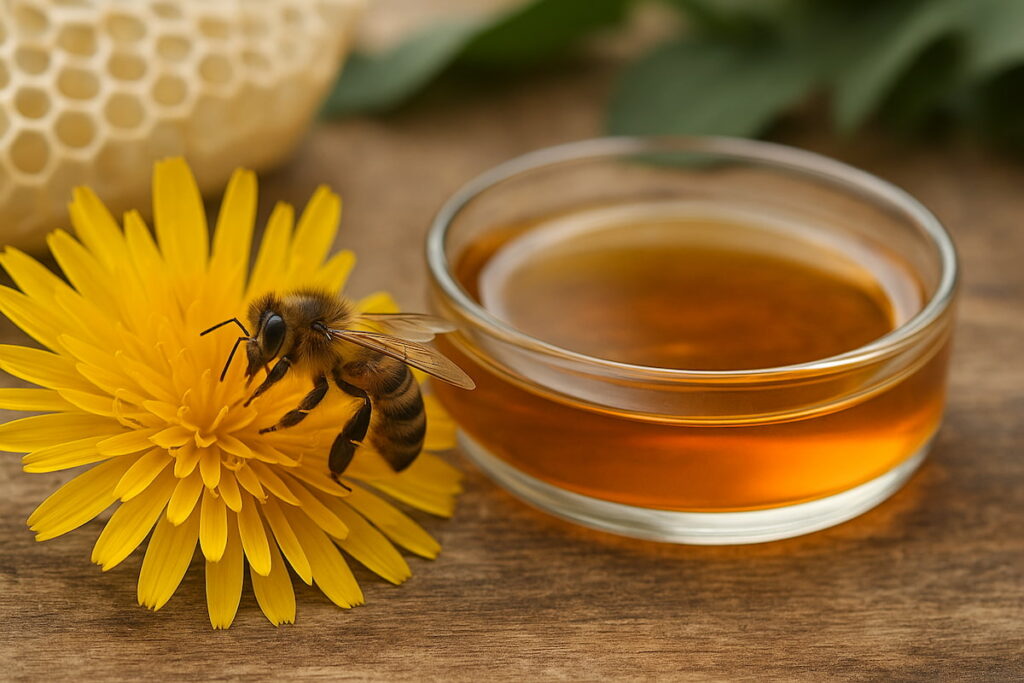
Honey is one of the most well-known natural substances on earth. It is produced by honey bees, consumed by humans for thousands of years, and continues to be valued as food and medicine. While people praise honey for its natural sweetness and health benefits, there is often confusion about whether honey contains melittin, a peptide found in bee venom. This question arises because honey and bee venom both come from honeybee species, yet they serve very different roles. To understand the answer, it is important to examine the composition of honey, the structure of melittin, the function of bee venom, and the role of melittin in modern science.
What Is Melittin?
Melittin is a peptide with diverse functions and is widely recognized as the major component of bee venom. It makes up about 40 to 60 percent of the dry weight of venom collected from a honeybee sting. Melittin is the main compound responsible for pain and inflammation after contact with bee venom. Its amphipathic nature means that part of its sequence interacts with water while the other part interacts with lipids. This property enables melittin to insert into membranes, where it causes disruption and pore formation by melittin that can lead to cell death.
The sequence of melittin is made up of 26 amino acid residues. Scientists classify melittin as a cationic peptide, meaning it has a positive charge that increases its interaction with negatively charged cell membranes. This function of melittin is what makes it powerful in both defense and potential medical use.
The Structure of Melittin
The structure of melittin has been studied for decades. It contains an alpha-helical form when interacting with lipid bilayers. This structure allows it to destabilize membranes. The amino acid sequences of melittin are conserved across honey bee species, which shows how important it is for the venom’s activity. Because melittin is a peptide component of honeybee venom, its presence is linked directly to the venom gland and venom sac, not the honey-making process.
Difference Between Honey and Bee Venom
Honey is produced by honeybees as a food source for the colony. Worker bees gather nectar, break it down with enzymes, and store it in wax combs until it becomes honey. Honey contains sugars, enzymes, antioxidants, amino acids, and plant compounds.
Bee venom, however, comes from the venom gland located in the abdomen of worker bees. When the stinger is used, venom is released from the venom sac and injected into the target. The venom contains melittin peptide, phospholipase A2, apamin, and other proteins. The properties of bee venom include causing pain, inflammation, and immune responses, which help defend the hive.
Honey and venom are completely separate substances. Honey never goes through the venom gland, so melittin is not naturally present in honey.
Does Honey Contain Melittin?
The simple answer is no. Honey does not contain melittin. While trace contamination may occur during hive activity, the amount of melittin present in honey is negligible. Honey bee venom is melittin-rich, but honey itself is not a source of this peptide.
Research comparing honey and venom confirmed that melittin belongs only to venom collected from the sting apparatus. Honey gains its beneficial activity from hydrogen peroxide, phenolic acids, flavonoids, and enzymes, not from melittin.
Effects of Bee Venom and the Role of Melittin
The effects of bee venom on humans are immediate after a sting. Pain, redness, and swelling result from melittin activity and the action of phospholipase A2. Scientists who study bee venom therapy focus on how melittin alone or bee venom extract can influence health. The activity of bee venom is linked to several biological effects, including antimicrobial action, anti-inflammatory responses, and immune modulation.
The Effect of Melittin on Cancer
Research has revealed the anti-cancer effect of bee venom and melittin across different types of cancer. Studies have shown that melittin induced apoptosis in breast cancer cell lines, lung cancer cells, ovarian cancer cells, and prostate cancer cells. These findings suggest that melittin also influences signaling pathways in breast cancer cells that regulate growth and spread.
Breast Cancer Research
Work at the Harry Perkins Institute of Medical Research in Australia has investigated melittin in breast cancer cells. The team confirmed that melittin suppressed tumor growth in highly aggressive breast cancer subtypes, including triple-negative breast cancer and HER2-enriched breast cancer cells. These are considered difficult to treat with standard cancer therapies. The institute also demonstrated that melittin induced apoptosis and acted on specific signaling pathways in breast cancer subtypes.
Cancer Therapy Potential
The potential of melittin as part of cancer treatment lies in its ability to target cancer cells compared to normal cells. The effect of melittin on apoptosis shows that melittin can kill cancer cells via pore formation and disruption of cancer cell membranes. The cytotoxic effects of melittin include triggering cell death through mitochondrial damage. Researchers have tested synthetic melittin and melittin in combination with chemotherapy drugs, showing synergistic effects of melittin with docetaxel in breast cancer patients.
Other Types of Cancer
Research extends beyond breast cancer to different types of cancer cells. Studies on lung cancer cells, prostate cancer cells, gastric cancer AGS cells, and ovarian cancer cells through induction of apoptosis suggest broad activity of melittin. These findings demonstrate that melittin is also a candidate for future cancer therapy trials across human cancer models.
Applications of Bee Venom and Melittin
Bee Venom Therapy
Bee venom therapy has been used for centuries as part of traditional medicine. Application of bee venom through controlled bee venom injection has been studied for arthritis, joint pain, and inflammation. The action of melittin in these cases involves immune modulation.
Medical Research
Bee venom and melittin are now studied in modern labs for use in cancer therapy, antimicrobial treatments, and drug delivery. The Perkins Institute of Medical Research and other universities explore how melittin peptide may one day be used in clinical settings.
Synthetic Development
Synthetic melittin is now available for controlled laboratory testing. Scientists use recombinant forms to study the function of melittin without relying on crude bee venom. Synthetic versions allow for consistent purity and enable safer exploration of medical applications.
Why Honey Gets Confused with Melittin
- Shared origin: Both honey and venom come from honeybees. This leads to the assumption they contain the same compounds.
- Marketing terms: Some cosmetics promote “bee venom honey,” which is actually honey infused with bee venom extract, not natural honey.
- Overlap in uses: Both honey and bee venom have traditional medicinal uses. Honey is used on wounds and sore throats, while venom and melittin are researched for cancer treatment.
Benefits of Honey Without Melittin
Even though honey lacks melittin, it provides many health benefits:
Antibacterial activity: Honey fights bacteria through hydrogen peroxide and plant phenols.
Wound healing: Honey reduces infection risk and promotes tissue repair.
Nutritional value: Honey contains sugars for energy and small amounts of vitamins, minerals, and antioxidants.
Soothing properties: Honey coats the throat and reduces irritation during colds.
These benefits stem from the natural composition of honey and not from melittin.
Demonstrated Differences Between Honey and Bee Venom
Research has shown that the presence of melittin is restricted to venom collected from the stinger apparatus. Honey, even when unfiltered, does not show measurable melittin. The activity of melittin is separate from the activity of bee venom as a whole. Crude bee venom contains melittin, phospholipase A2, and apamin, while honey contains sugars and antioxidants.
Scientists who studied venom or melittin peptide confirmed that melittin has also been shown to act specifically on cancer cells, while honey remains valuable for wound care and antimicrobial protection.
Final Thoughts
So, does honey contain melittin? The answer is no. Honey is created in the hive as food for bees and contains sugars, enzymes, and antioxidants. Melittin is the main peptide component of bee venom, secreted from the venom gland and stored in the venom sac for defense. While honey does not contain melittin, both substances reflect the remarkable contributions of honeybees.
Melittin has also been studied for its anti-cancer potential. Work at the Harry Perkins Institute of Medical Research and other institutions found that melittin induced apoptosis in breast cancer cells, ovarian cancer cells, lung cancer cells, and prostate cancer cells. Research suggests that melittin may target cancer cell lines across different types of cancer, making it a candidate for cancer therapy in the future. Synthetic melittin and combinations with chemotherapy demonstrate that melittin significantly enhances treatment outcomes.
Honey continues to shine as a natural food and healing agent without melittin. Bee venom, however, contains this powerful peptide and remains an area of medical research. Understanding the difference between honey and bee venom prevents confusion and highlights the unique role of each. Honey offers antimicrobial and nutritional benefits, while bee venom and melittin remain under study for cancer treatment and other medical uses. Together, they showcase the value of honeybee species and their products to human health.